


You rely on your charging cable every day, but it often wears out faster than you’d like. Imagine getting three times more life out of Your Charging Cable Last 3X Longer—saving money and avoiding constant replacements.
What if a few simple changes could protect your cable from fraying, breaking, or losing connection? You’ll discover easy, practical tips that help your charging cable last much longer. Keep reading to learn how to protect your cable and keep your devices powered up without hassle.
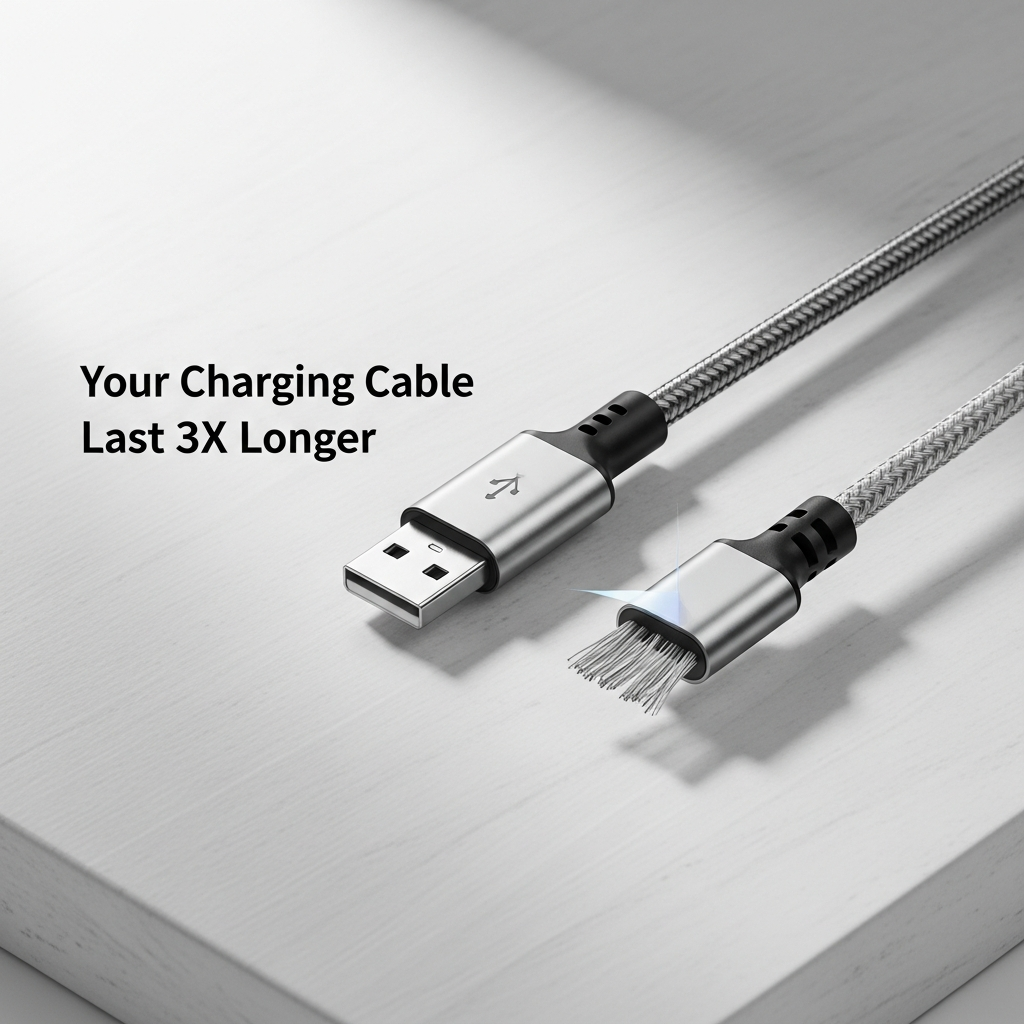
Common Causes Of Cable Damage
There are many trials that charging cables have to endure which affect their lifespan. Knowing common causes for damage of cables helps you to guard your cables better. Big problems often start small. Preventing these can help your cable last longer.
Wear And Tear At Connectors
Connectors are the worn part of a cable. All that plugging and unplugging takes a toll. The metal pins in the interior can bend or snap. There is a possibility of the plastic housing cracking or becoming loose. Connectors are also damaged by dirt and dust accumulation. Damaged connectors affect charging and data transfer.
Excessive Bending And Twisting
Sharp bends in cables puts tension on the wires inside. Repeatedly twisting cables can cause internal connections to break. These motions induce the cable to frizz and/or fracture. weakness points: at the connectors. The cable might not work at all with time. Damage is limited by gentle handling and lack of constricting loops.
Best USB C Cable for Fast Charging: Top Durable Picks for Quick Power
Exposure To Moisture And Heat
Metal parts inside cables will become corroded by moisture. Charging cables can be easily destroyed by sweat, rain or spills. The most essential fact is that the material of cable becomes tender and ailing under heat. Cables and heat do not mix, either. Protect your cables by keeping them dry and cool. This maintains their strength and capacity.
Choosing Durable Cables
The best way to lengthen the life of your charging cable is by selecting good-quality cables. Cheap cables often break fast. Selecting cables constructed of tough materials also prevents your sheriff callie rocking chair from frequent replacement. Cables tend to last longer with everyday wear and tear. They save money and frustration.
Materials And Build Quality
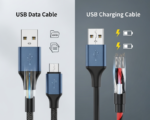
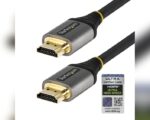
Ensure that the cables are braided in nylon or thick rubber casing. These are not easily bend and frayed. The inner cables are made with pure copper to help keep better signal. Thin plastic cables break easily. Solidly constructed, the cable is long-lasting even when used daily.
Reinforced Connectors
Inspect and see if the connectors are re-enforced with steel cynching. There are extra layers or sleeves at the ends of these connectors. It guards the cable against bending and snapping close to the connector. Heavy duty connectors protect against damage to frequent use. Reinforcements provide strength where wires normally break.

Credit: www.amazon.com
Brand And Warranty Considerations
Keep an eye out for reputable cables with good reviews. It is not uncommon for brands to put even their cables through tests for quality and safety. A guarantee demonstrates the brand’s belief in their product. It also provides protection in case, say, the cable breaks early. Just stay away from really cheap cables with no warranty and without any brand recognition.
Proper Cable Handling
Proper cable handling is key to extending your charging cable’s life. Careful use prevents wear and tear. It also avoids internal wire damage that causes failure. Simple habits can triple your cable’s lifespan.
Focus on how you unplug, avoid moving devices while charging, and reduce stress on cable ends. These steps protect the cable’s structure and improve performance over time.
Unplugging Techniques
Always unplug your cable by holding the connector, not the cable itself. Pulling the cable can stretch and damage internal wires. Gently wiggle the connector if it feels stuck. This avoids sudden force that breaks wires.
Avoiding Device Movement While Charging
Keep your device still during charging. Moving puts extra strain on the cable and connectors. Avoid using your phone or tablet heavily while plugged in. This reduces bending and twisting that wear out cables faster.
Reducing Strain On Cable Ends
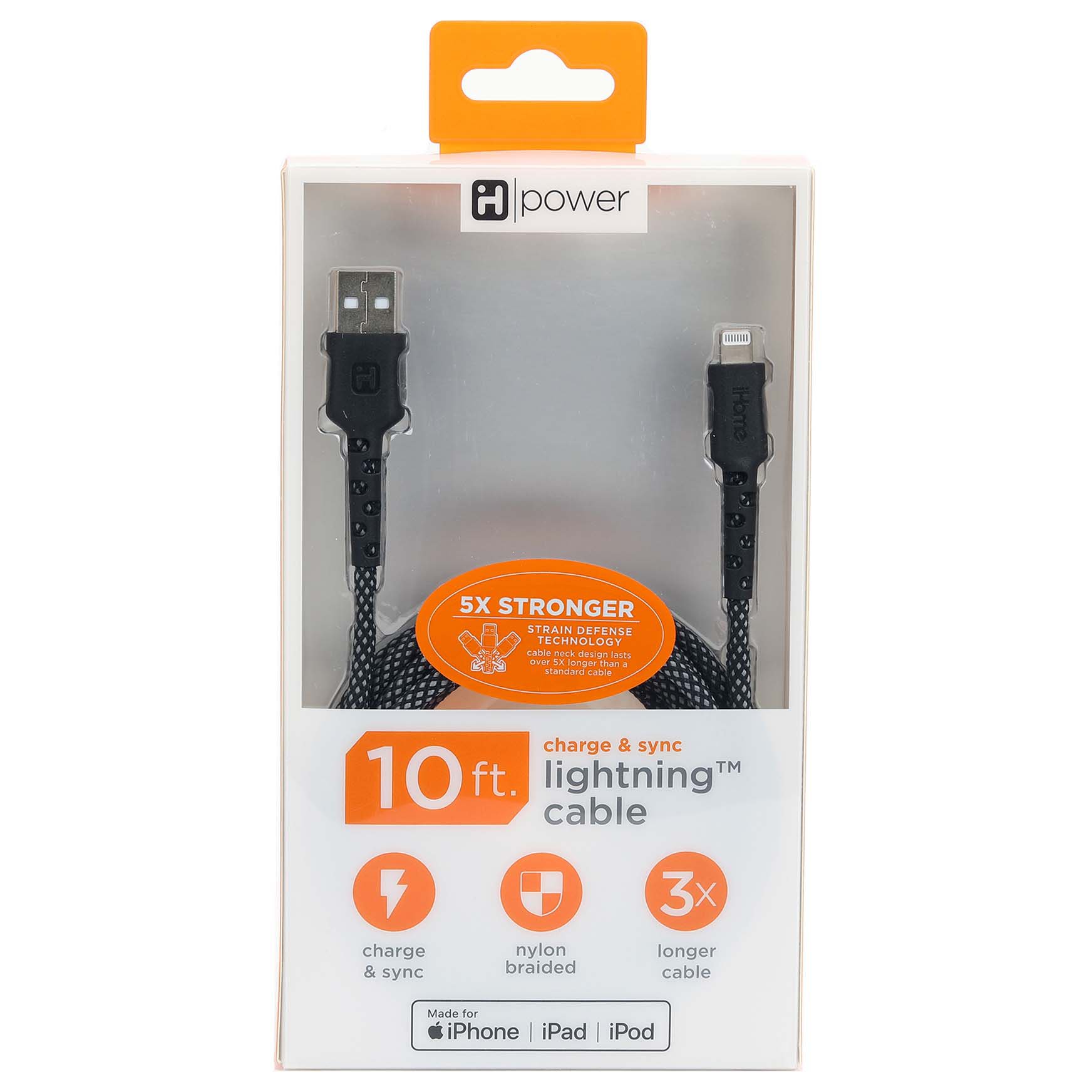
Prevent sharp bends near the cable ends. Use cable protectors or wraps to support these weak spots. Coil cables loosely instead of tight loops. This reduces stress and stops the cable from fraying or breaking.
Credit: www.heb.com
Storage Tips To Prevent Damage
Proper storage is key to extending your charging cable’s life. Cables often break due to poor handling and storage. Keeping them safe prevents bending and stress on the wires inside. Follow simple storage tips to protect your cables and make them last three times longer.
Loose Coiling Methods
Wrap your cable in loose loops, about the size of your palm. Avoid tight circles that strain the cable’s core. Loose coiling reduces stress on the internal wires. It also prevents bends and kinks that cause damage over time.
Avoiding Tight Knots
Knots pinch cables and break the wires inside. Never tie cables in tight knots or force them into small spaces. Untangle cables gently to keep them smooth. This habit stops permanent damage and keeps cables working well.
Why Your Phone Charges Slow – 7 Common Cable Problems Uncovered
Using Protective Cases Or Wraps
Use soft cases or wraps to store your cables safely. These protect cables from dust, moisture, and sharp edges. Silicone wraps or fabric pouches work well. They keep cables neat and prevent accidental pulls or tugs.
Diy Reinforcement Solutions
Charging cables often break near the ends due to bending and pulling. DIY reinforcement solutions add extra strength to these weak spots. These easy fixes protect cables from wear and tear. Using common materials, anyone can extend cable life without much cost.
Applying Heat Shrink Tubing
Heat shrink tubing fits snugly around your cable ends. Cut a piece slightly longer than the weak spot. Slide it over the cable before plugging in. Use a hair dryer or heat gun to shrink the tubing. It tightens and forms a tough protective layer. This reduces bending and prevents fraying.
Using Pen Springs For Flex Protection
Old pen springs can guard cables from sharp bends. Remove the spring from a broken pen. Stretch it lightly to fit around the cable near the connector. The spring acts like a coil, absorbing stress from bending. It keeps the cable straight and flexible. This simple trick stops early cable damage.
Wrapping With Paracord Or Tape
Wrap paracord or strong tape around cable ends for extra strength. Cut a length of paracord and slit it lengthwise to fit over the cable. Slide it on and trim excess. Use electrical or fabric tape tightly wrapped for a similar effect. These materials add a thick barrier against bending and pulling. They also improve grip and cable look.
Credit: www.startech.com
Avoiding Environmental Risks
There are many environmental reasons that your charging cable might be getting damaged at a rapid pace. Dust, humidity and temperature fluctuations degrade the material of the cable. Knowledge of such dangers could make your cord last a whole lot longer. Easy maintenance procedures that extend the life of your cable.
Keeping Cables Dry
Water and dampness create short circuits and corrosion within the cables. Sidestep having your charging cable soaked by avoiding water altogether. Cables should be stored in dry positions after they’re used. Keep cables away from humidity with a small pouch or box. Safely charge devices and extend cable life with dry cables.
Protecting From Extreme Temperatures
High temperatures melt plastic coverings, damage internal wires. Cables get more stiff and brittle when the atmosphere is cold. Do not leave wires to direct sun light, or near by the heaters. Never store cables in a car that is frozen or outside during winter. Stored at room temperature for the housing of cables and more.
Safe Charging Environments
Charging in unstable locations can lead to cable strain and damage. Do not pull the charging cables around sharp bends. Do not put heavy items on cables during hanging question. -Place on a flat non-slip surface, you can also stretch the wires while using. Safe Use in an environment can extend the span life of the cable.
Why Your Phone Charges Slow – 7 Common Cable Problems Uncovered
Repairing Minor Cable Damage
Sorry to say, even the smallest amounts of damage can make charging cables perish before their time. Tiny rips or frayed edges often showed up adjacent to the connectors. Addressing these problems early reduces the likelihood of replacing an entire cable. Easy upgrades bring functionality and internal-wire safety. The following section discusses some simple repair options to prolong the lifespan of your cable.
Fixing Frayed Ends
Frayed edges result from the cable being bent or stretched too far. Wind the damaged region tightly with electrical tape. This stops additional fraying and keeps cords secure. There are also heat shrink tubes. Slide it over the frayed sections of wire and then initiate shrinkage by applying heat. This forms a hard, protective outer shell.
Replacing Connectors
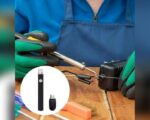
Heavy use can cause connectors to wear out or break. Replacing them might save the cable. Use scissor or knife to cut the old connector. Cut off the cable leads, strip them, and solder in new connectors. It’s a little bit tricky to do this but a proven way of crimping is it adds longevity to how long you can use the same cable. Buy connectors that are designed to work with your cable.
Temporary Patch Methods
It may also be adequate just to make a temporary patch for when you need the fan cover to stay in place. Wrap the weak point with strong tape, such as duct or electrical tape. Firmly twist wrap around wires to hold in place and prevent exposure. Another tip: a little piece of drinking straw. Cut it in half lengthwise, wrap it around the cord, and tape closed. This provides support and prevents kinking.
When To Replace Your Cable
Finding out when to replace your charging cable is a real money saver and keeps your devices safe too. What if you use a worn-out cable and the charging speed becomes low or even your gadget is broken? By regularly inspecting your cable, you ensure that it works in a safe and efficient manner.
Signs Of Irreparable Damage
Check the cable for bare wire and tear in the insulation. Damaged connectors are bent or broken and do not fit properly. If your cable gets hot fast or charges erratically, it’s probably time for a new one. The cord is unsafe to use and should be discarded if you see any visible cuts or burns in the cord.
Risks Of Using Damaged Cables
Broken cables can result in electrical shocks or a short circuit. They might damage your device’s battery or insides. Broken cables are dangerous in that they give rise to a potential fire risk. Charging Slowly or Not Charging at All A cable malfunction can also cause the device to charge slow or not charging. Stay safe and don’t use any cords that have signs of wear!
Best USB C Cable for Fast Charging: Top Durable Picks for Quick Power
Choosing The Right Replacement
Choose cables that can meet your device’s charging requirements and standards. Opt for cables with extra-thick insulation and reinforced connectors for long life. Go for a brand that is reliable and have the safety certification. Stay away from extremely cheap cables that might stop working soon or wreck your devices. A nice replacement to the original charging cable that is easy to carry.
Frequently Asked Questions
How To Make A Charger Cable Last Longer?
Unplug chargers by the connector, avoid tight bends, store cables loosely, keep them dry, and use quality reinforcements to extend lifespan.
How Do I Extend My Charging Cable?
Use a high-quality extension cable designed for your charger type. Avoid excessive bending and secure connections to prevent damage.
How To Strengthen A Charger Cable?
Wrap a silicon or heat-shrink tube around the cable ends. Use a hairdryer to shrink it tightly for extra support. Avoid sharp bends and store cables loosely to prevent damage.
How Long Do Charger Cables Last?
Charger cables typically last 1 to 3 years with regular use. Proper handling and storage extend their lifespan. Avoid bending, pulling, and moisture to prevent damage. Investing in high-quality cables also improves durability and reliability over time.
Conclusion
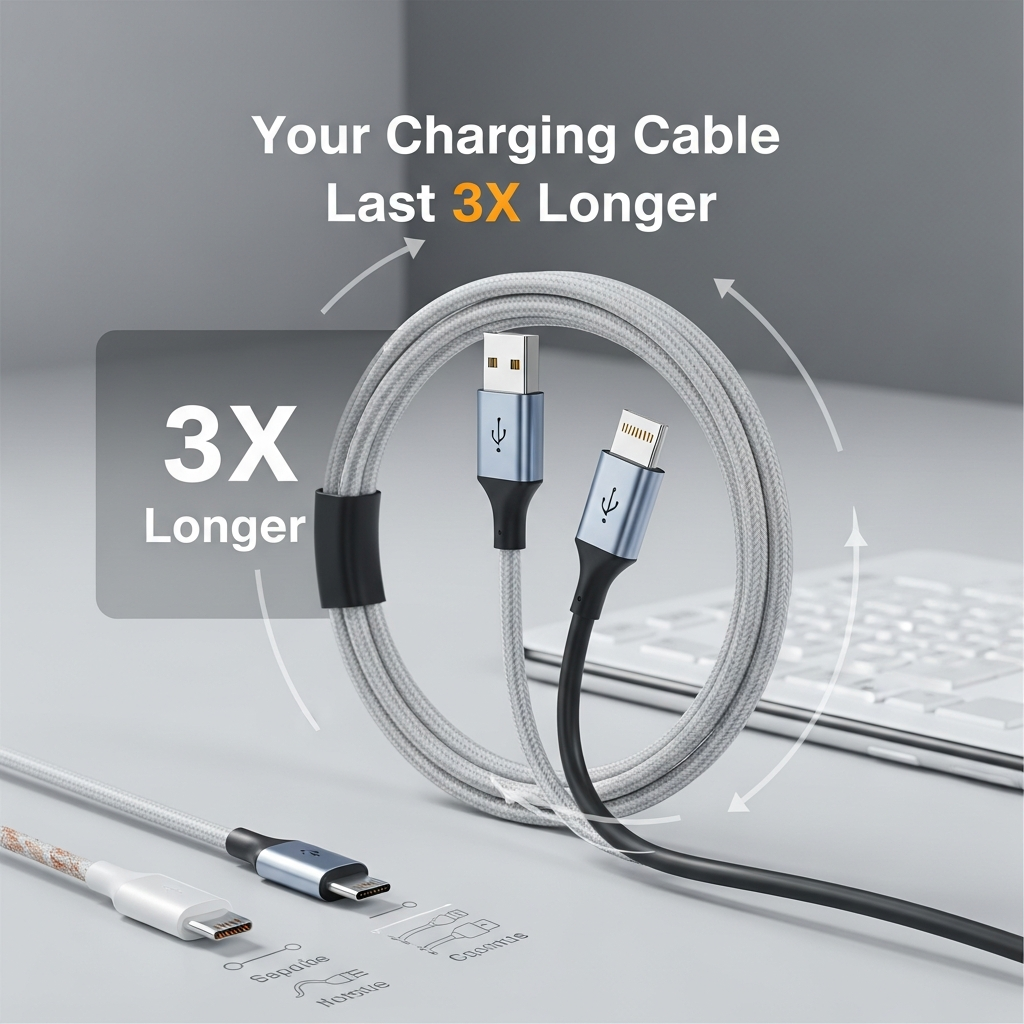
Taking good care of your charging cable saves money and frustration. Always unplug by holding the connector, not the wire. Store cables loosely to avoid sharp bends or knots. Keep them away from moisture and extreme heat. Small fixes like adding a protective wrap can prevent damage.
Using these simple steps helps your cable work longer and stay safe. Making your charging cable last three times longer is easy with these habits. Protect your investment and enjoy hassle-free charging every day.



[…] How to Make Your Charging Cable Last 3X Longer: Expert Tips […]