

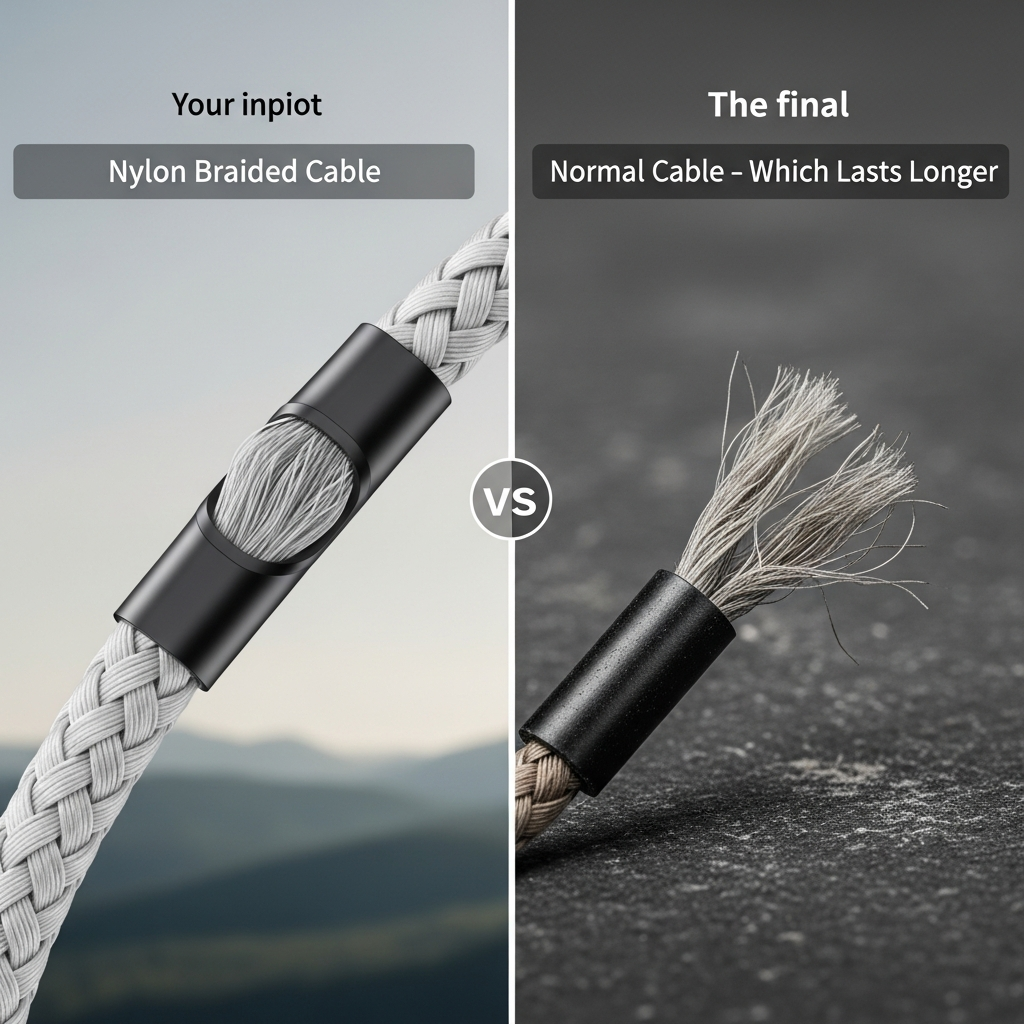
Nylon Braided Cable Vs Normal Cable – Which Lasts Longer? When it comes to choosing the right cable for your devices, you might wonder: does a nylon braided cable really last longer than a normal one? If you’re tired of frayed cords and tangled messes, this question is especially important.
Your cables are the lifeline between your gadgets and power or data sources, so picking the right type can save you money and frustration. You’ll discover the key differences between nylon braided and normal cables, how each performs over time, and which one truly stands up to daily wear and tear.
By the end, you’ll know exactly which cable deserves a spot in your tech arsenal. Ready to find out which cable lasts longer? Let’s dive in.
Durability Comparison
And when it comes to nylon braided cables vs normal, durability is key. Knowing how each endures wear and tear enables you to select the right cable. This part separates overall durability into the fundamental components that determine cable life.
Material Strength
Cables made with nylon braided material provide an additional protection, It can avoid wire twisting which is able to keep a good condition as new. This layers prevents the inner wires from harm. Regular cables have a rubber or plastic coating, which is weaker. They also have greater tensile strength to last longer during extreme use.
Resistance To Fraying
Has anyone else had this issue with their cable? Wasn’t an abrupt failure, ended up fraying eventually as standard cables are prone to do over time. The rubber-and-plastic surface can crack and peel. Nylon braids fray less because they have a tight weave. The braided jacket ensures durability for the cable regardless of whether it is twisting, bending or pulling.
Bend And Pull Endurance
Cables are bent and soused daily. Regular cables can be weakened and break inside after numerous bends. Nylon braided cords bend and squeeze damage less. Their interwoven layer provides the greatest strength for any telescopic whip, spreading stress more uniformly and minimizing the likelihood of internal wire breaks.
Wear Near Connectors
Cable connectors are the weakest part of any cable. Regular Centronics cables crack and break at or near the connectors due to this strain. Here, you get the added protection of nylon braided cables. the grieved sheath goes up near to the connectors, it lessens wear and increases cable life.
Tangle And Flexibility
Excessive tangle and flexibility are two important parameters for cables. They are also impacting daily use and the lifespan of a cable. Knowing these characteristics assists in making the best cable selection. These are the key areas of difference between a nylon braided cable and a regular one.
Best USB C Cable for Fast Charging: Top Durable Picks for Quick Power
Tangle Resistance
2 in 1 Multifunctional: takes your device from a dead battery to full charge, keeping you off the grid as long as possible. Smooth nylon braided also with Tangle-free Cable, Durable and Strong double-braided layer. The woven nylon cover is low-friction, so it’ll never knot. Typical cords that are made up of slick plastic grab in no time. Less tangling is a sign of less wear and longer life.” It also saves some time and aggravation.
Cable Stiffness
Nylon braided cables are more rigid than the standard ones. The additional layer of nylon makes this one thicker and more rigid. Regular cables are more soft and bendable but also vulnerable to breaking. The stiffness is there to keep the internal wires from bending too much. But super-stiff cables may seem clunky to some users.
Ease Of Use In Tight Spaces
Standard cables are more supple and take a circuitous rote. They also can be extended and bent to interconnect devices in a congested region. Nylon braided ones are stiff too, may be even more difficult to working with. However, they are usually sturdy enough to make up for this. It all comes down to how many times you’ll want to bend the cable.
Signal Quality
The quality of the signal is a driving force in how good a cable works. Good signal quality of a cable leads to clear sound and good data transfer speed. Bad signal quality will result in cutouts with less than satisfactory experience. The braided ones can keep a good signal better than the regular cords.
Emi Shielding Benefits
In many cases, nylon braided cables have a metallic face hiding the woven outer jacket. This shield prevents electromagnetic (EMI) and radio frequency (RFI) intrusion from devices in immediate vicinity. Dust and EMI can interfere with sensitive electronics, such as in a long cable run. Regular cables will have less effective shielding. This leaves them more susceptible to signal interference in busy surroundings. Nylon braided cables for enhanced EMI shielding to prevent the signal instability and keep the signal clearly.
Impact On Audio And Data
The significance of smooth audio and data simply can’t be overstated, and signal consistency is the key to both. Nylon Braided Cables: They decrease interference, thus providing a decent sound quality and less data errors. Regular cables may produce additional interference, resulting in static or signal dropouts. This discrepancy makes a difference especially on highly sensitive devices, such as headphones or external drives. Wrapped in a nylon braided coating, its durable enough for traveling or everyday use and ensures you stay connected anywhere, anytime.
Cost And Aesthetics
The cost consideration and looks are also some of the factors to decide between nylon braided cables and regular ones. These are relevant to both user experience and value. Understanding the price deltas, design choices, and physical attributes is part of making an informed choice. These issues are discussed in this section.
Best USB C Cable for Fast Charging: Top Durable Picks for Quick Power
Price Differences
Normal cables are much cheaper than nylon braided ones. The added cost is a result of better materials and greater manufacturing complexity. Conventional cables have only simple rubber or plastic coatings, which are cheaper to make. Nylon braided cables are more expensive due to its durability and higher quality feel. Inexpensively As to why budget buyers may want normal cables, it’s simple: they are cheaper in the beginning.
Design And Color Options
Tangle-free nylon braided covering ensures easy use and storage. This kind offers options for users to coordinate cable with their devices or room style. Regular cables usually arrive in basic black, white or gray hues. Nylon cables also have this gorgeous woven look to them that’s really classy and premium. Nylon braided cable If you like your cables slick looking and bohemian, go for nylon clad.
Bulk And Weight Considerations
Nylon braided cables are thicker and heavier than a regular cord. A thick layer of braids contribute to the bulk here, and it could have an effect on ho much you’re going to be able to stuff this thing in a bag. Regular cables are lighter and thinner, making them more convenient for you to take on trips or store in the glove box of your car. If you like the cables to feel a bit more light and flexible, you may want to choose normal. Braided nylon cords are strong, but also too heavy and they lack flexibility.
Use Case Scenarios
There is no right or wrong decision when it comes to nylon braided cables versus traditional non-braided cables — the choice of one over the other will depend on who you are and where/how you use these accessories. Different circumstances ask for different quality of the cables. Knowing these use cases can help choose the more durable cable that is best for you.
Daily Device Usage
Normal cables are usually good enough for the kind of everyday charging and data transfer you’d find in day-to-day use. They are lightweight and foldable so they can be easy to carry. But regular cables can fray or snap at the ends after too much bending. Nylon braided cords wear less than others, too. And their sturdy exterior can withstand daily pulls and twists. Braided cables are also good for users who will be moving around a lot or unplugging their devices often.
Professional Audio And Data
Audio and data pros require cables that hold up to both signal quality and the test of time. Regular cords could get interference or become damaged quickly in a lot of traffic environments. Nylon braided cables tend to have metal cording threaded inside. This cuts down on noise and keeps signals crisp. The braided jacket helps prevent external damage and keep internal wires in place. Thanks to this, the cords are better prepared to put up with the wear and tear of studio or event setups.
Outdoor And Heavy-duty Applications
For outdoor use, you need cables that can take some abuse. Typical cables can crack or fray after sun exposure, when it gets damp or dirty. Nylon braided cable provides more protection from the elements. The tough sheath prevents fraying and tangling in the field. Braided cables also help out in construction and heavy machinery environments. They are made to endure rough handling for extended periods of time against harsh conditions.
Credit: www.waytekwire.com
Common Drawbacks
The nylon braided and even regular cables come with downsides that depreciate overall user experience. Knowing these typical problems is a good way to make your decision. These negative aspects are related with physical properties, material cost and flexibility that affect everyday applications of cables and cable life.
Heaviness And Bulk
Nylon braided cords are thicker and heavier than ordinary cables. The braided layer is the one that gives it extra thickness/density. That extra heft can also make the cable slightly less convenient to take with you in your bag. It may be too big for tight spaces or small pants pockets. This weight is a turn off for some users.
Higher Price Point
Nylon braided cables are priced at a premium to standard cables. There’s additional material and labor in the manufacturing process, too. This comes at a higher-priced point, which might not fit into all budgets. Those who only require basic use could always purchase normal cables for a cheaper price. Indeed, all this has come at a heavy price.
Best USB C Cable for Fast Charging: Top Durable Picks for Quick Power
Reduced Flexibility
The shielded sleeve will cause the cable is not flexible. It may be more difficult to bend or coil tightly. This stiffness can be a problem in tight installations or when you need to bend the cable. Regular cables tend to be more manageable, as they’re softer. Lesser flexibility might result in the cable not be used in the way you prefer on a daily use.
Choosing The Right Cable
Choosing the right cable can affect your device’s performance and durability. Different cables serve different needs. Some offer toughness, while others focus on flexibility and cost. Understanding when to use each type helps you save money and avoid frustration. The choice depends on how and where you will use the cable.
When To Pick Braided
Pick a braided cable for heavy use and rough conditions. These cables resist fraying and bending much better than normal cables. They do not tangle easily, which keeps them neat and ready to use. Braided cables last longer when you pull or twist them often. They also protect the wires inside from damage. Choose braided cables for travel, daily charging, or outdoor use.
When Standard Cables Suffice
Standard cables work well for light or occasional use. They are more flexible and easier to bend in small spaces. These cables cost less and fit most basic needs. If you use cables mostly at home or office and handle them gently, standard cables are fine. They are also better when you want a lightweight option for easy storage.

Credit: www.amazon.com
Frequently Asked Questions
Do Nylon Braided Cables Last Longer?
Nylon braided cables last longer due to their durable woven exterior. They resist fraying, tangling, and bending better than regular cables. This extra protection reduces wear and tear, extending the cable’s lifespan significantly compared to standard PVC-coated cables.
What Are The Disadvantages Of Braided Cable?
Braided cables are thicker and heavier, making them less flexible in tight spaces. They also cost more than standard cables.
What Is The Advantage Of Braided Cable?
Braided cables offer superior durability, resisting fraying and tangling better than regular cables. They provide enhanced protection, last longer, and often improve signal quality through better EMI shielding. Their sturdy design makes them ideal for frequent use and reduces the need for replacements.
Are Braided Power Cables Better?
Braided power cables offer better durability and resist fraying, tangling, and bending damage more than standard cables. They often last longer and provide improved signal protection but can be stiffer and cost more. Choose braided cables for frequent use and enhanced longevity.
Conclusion
Nylon braided cords tend to last longer than the normal cable. Their woven construction prevents fraying and protects the cable from bending damage. Regular cables can break or become more easily tangled. But braided cables can be thicker and more expensive. Opt for braided cables if you want them to last forever and not get tangled as much.
For the occasional, low-use needs, normal cables do the trick. Think about how you take care of your device or what you are willing to spend on it. Long-lasting cables also remain cost-effective by preventing budgets being spent on replacement cables. A reliable cable provides smooth to use and long-term service.